
Grapefruit Rosemary Marmalade: A Seasonal Winter Citrus Recipe
Grapefruit is the winter citrus that refuses to be dessert. Its bitterness is the point, and it's why a spoonful of grapefruit marmalade does more for a piece of toast or a pork chop than a sweeter preserve ever could. Add rosemary — resinous, evergreen, stubborn — and you get something that sits comfortably between the jam shelf and the spice rack. This recipe isn't quick, but most of the work happens while you're doing something else. One afternoon yields four or five jars and a kitchen that smells like a citrus grove after rain. It also makes a winter kitchen feel less like a waiting room for spring and more like a place where something good is happening.
Why Grapefruit and Rosemary Work Together
Pink grapefruit peel carries three things sugar can't fake: a clean bitterness, a floral top note, and enough pectin in the pith and seeds to set a batch without added powder. Rosemary answers that bitterness with pine and camphor — the same aromatic family that makes grapefruit's flavor read as bright rather than sour. Used sparingly, it tastes like the herb was always meant to be there. Used carelessly, it tastes like a cough drop, which is why the sprigs go in for the last twenty minutes and no longer. The result is savory-sweet: sharper than orange marmalade, less polite, better with cheese.
Think of the pairing the way you'd think of a gin and tonic: grapefruit supplies the bitter citrus, rosemary supplies the evergreen aromatics, and sugar only rounds the edges. A spoonful on a cracker with soft goat cheese is the fastest way to understand it. The same marmalade brushed onto a roast chicken during the last ten minutes of cooking gives you lacquered skin and a pan sauce that needs nothing more than a splash of vinegar. It's a preserve that behaves like a condiment.
Choosing Fruit and Rosemary
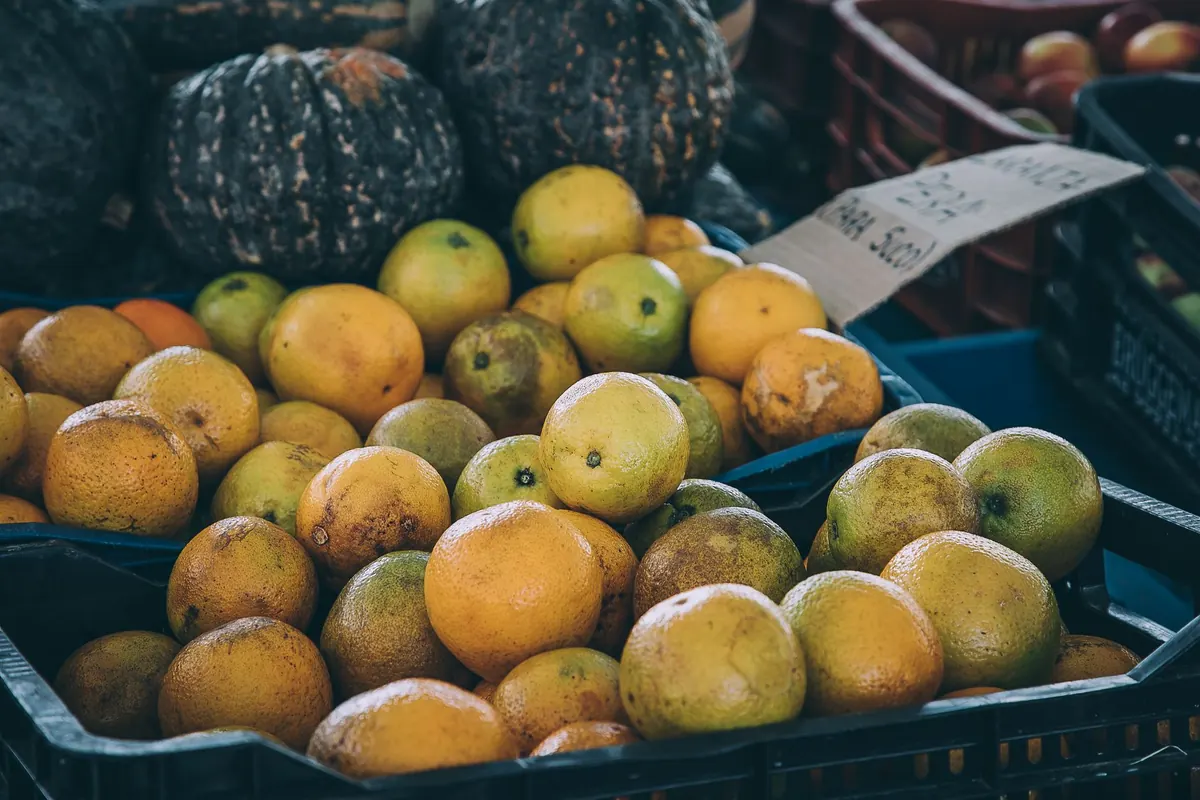
Look for grapefruit that feels heavy for its size and gives slightly when you press it. Thick-skinned fruit carries more pith, which means more pectin but also more bitterness. Want a gentler marmalade? Buy thin-skinned fruit and strip most of the white pith. Prefer the astringent, old-fashioned style? Leave it on.
Pink and Ruby Red grapefruit give the prettiest jars, a soft coral color and a rounder sweetness. White grapefruit makes a paler, more bracing preserve. Both work. If you can find Rio Red or Star Ruby, they tend toward deeper color and juicier flesh. Marsh and Duncan are classic white varieties with a sharper, more old-school bite. Since you're eating the peel, buy organic when the budget allows, and scrub whatever you buy with hot water and a vegetable brush; residues concentrate in citrus peel.
For rosemary, use fresh sprigs about 10 cm / 4 inches long — two for a subtle batch, three if you want it unmistakable. Dried rosemary tastes dusty in a preserve and doesn't infuse cleanly. If your rosemary is woody and thick, bruise it once with the back of a knife so the oils can escape. If it's tender and new, just drop it in whole.
What You'll Need
- 3 large pink or Ruby Red grapefruit (about 1.5 kg / 3 1/4 lb total)
- 1 lemon, for juice, if you want extra brightness
- About 1 kg / 5 cups granulated sugar — but weigh your fruit first, see below
- 2–3 fresh rosemary sprigs
- 1.5 L / 6 cups water, plus more as needed
- A square of muslin or cheesecloth and kitchen string
- 4–5 clean half-pint (250 ml) jars with new lids
Skip the pectin. Grapefruit brings plenty of its own if you tie the seeds and membranes into the pot. As for sugar: weigh your prepared fruit and soaking liquid, then use roughly the same weight of sugar. A little less — about 80 percent — gives a softer, looser marmalade. A full equal weight sets firmer and keeps longer. If you like a brighter, less sweet preserve, start with 75 percent and adjust after the first jar. You can always add a little more sugar at the boiling stage, but you can't take it out.
The Method: Soak, Simmer, Set
This is a two-day recipe only in the sense that the fruit soaks overnight. Start in the evening.
- Scrub and cut. Wash the grapefruit well. Halve and juice them over a bowl, catching the juice and every seed. A citrus reamer or a fork works; a juicer extracts more but also more pith, which you may or may not want.
- Decide about the pith. Scoop the membranes and thick white pith into a separate bowl, keeping some or most of it depending on how bitter you want the finished marmalade. Keep all the seeds. If you want a delicate marmalade, discard most of the pith and rely on the seed packet for pectin. If you want the full bitter edge, keep it all.
- Shred the peel. Slice the shells into strips 2–3 mm wide. Wider shreds stay chewy; thinner ones melt into the gel. Take your time — this is the step people rush and regret. A sharp knife and a steady rhythm make it meditative rather than tedious.
- Tie the bag. Put the seeds, membranes and any spare pith into muslin and tie it closed. That's your pectin packet. Leave a long string so you can fish it out easily.
- Soak. Put the shredded peel, juice, water and bag in a heavy pot. Leave it covered overnight at room temperature. Eight hours or more softens the peel and draws pectin into the water. If your kitchen is very warm, put the pot in the fridge; cold soaking works too, just a little slower.
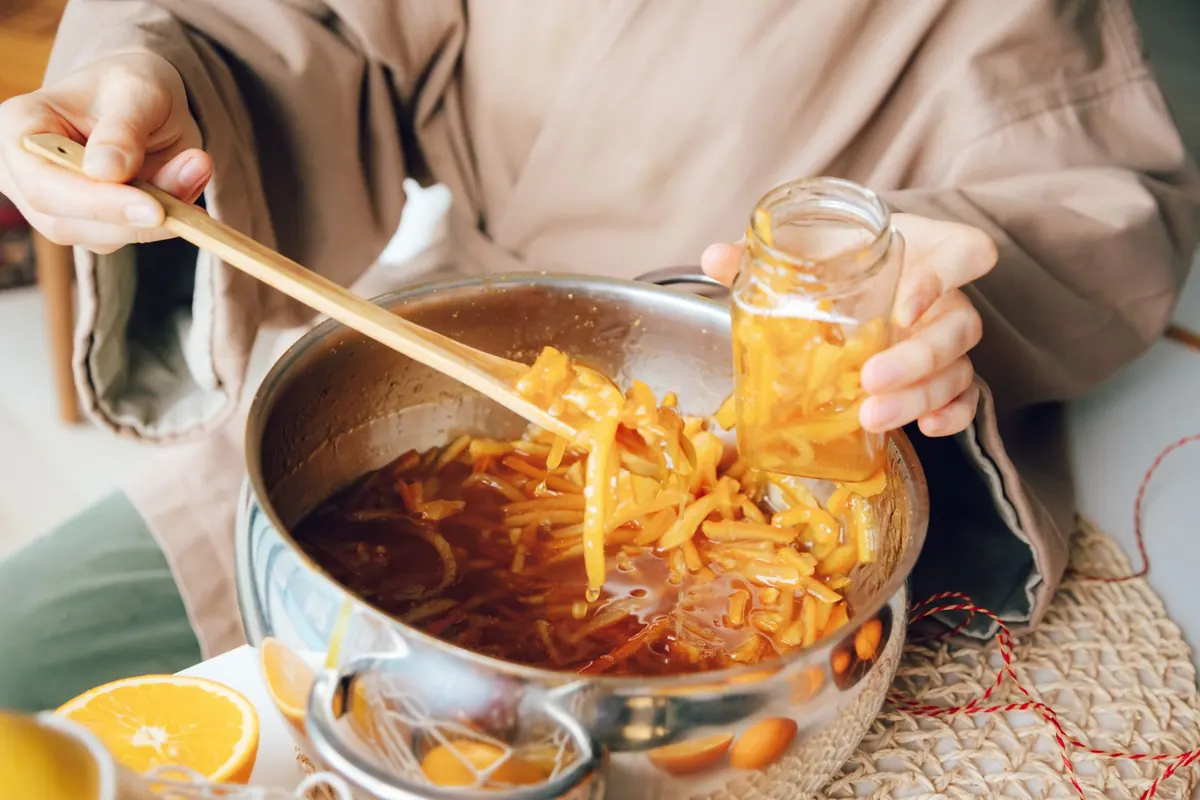
- Simmer the peel. Bring to a boil, then lower to a steady simmer for 45–60 minutes, until a shred squashes easily between your thumb and finger. Remove the bag and squeeze it over the pot before discarding. That squeeze is liquid gold — it's where a lot of the pectin lives.
- Add sugar and dissolve. Stir the sugar in over low heat. Don't let it boil yet. When you can rub a little liquid between your fingers and feel no grains, you're ready. This can take several minutes; be patient. Scrape the bottom of the pot to make sure no sugar is stuck there.
- Boil hard. Raise the heat and boil, stirring now and then, for 20–35 minutes. Add the rosemary for the last 15–20 minutes, then lift it out and taste. Skim off any foam that rises. The color will deepen from pale coral to a rich, glowing amber-pink.
- Test the set, then jar. Directions below.
The rosemary should be a shadow, not a spotlight. If you can't taste the grapefruit anymore, the sprigs stayed in too long.
Testing for Set — and Rescuing a Loose Batch
Put a small plate in the freezer before you start boiling. When you think the marmalade is close, spoon a little onto the cold plate and return it to the freezer for two minutes. Push the edge with your finger: if it wrinkles and holds a skin, it's set. If it slides around like syrup, keep boiling and test again every five minutes. A candy thermometer is more precise: marmalade sets around 104–105°C / 219–221°F at sea level. Subtract about 1°C for every 300 metres of altitude. You can also use the spoon test: dip a cold metal spoon into the pot, let it cool for a moment, then tilt it. If the drips fall in a slow sheet rather than a stream, you're there.
If your marmalade is still loose after a proper boil, don't panic. You have options. First, boil it harder for another 10–15 minutes — sometimes it just needs more evaporation. Second, stir in a tablespoon of lemon juice; the acid helps pectin set. Third, if you have liquid pectin, add a small pouch according to the package directions and boil one minute more. Finally, remember that marmalade thickens considerably as it cools. A batch that looks slightly runny while hot may be perfect the next morning. If it's still loose after a day, call it grapefruit rosemary syrup and use it on pancakes, ice cream, or in cocktails. No one has ever complained about that outcome.
If you overshoot and the marmalade sets too firm, stir in a little warm water or apple juice, a tablespoon at a time, and reheat gently until it loosens. It won't be quite the same texture, but it will still taste good.
Ways to Use Grapefruit Rosemary Marmalade
This is the kind of preserve that earns its shelf space because it doesn't limit itself to toast. A few favorite uses:
- <
Photo: Hallie / Pexels