Small-Batch Lemon Marmalade Recipe with Just Three Ingredients
Three lemons, a bag of sugar, and a pot of water. That is the whole recipe, and it makes two jars of marmalade bright enough to wake up a slice of toast. Small-batch marmalade has a reputation for being fussy, mostly because people try to make eight jars at once in a pot that is too small, then boil it for an hour hoping for the best. Scale it down and the whole thing turns forgiving: the peel cooks tender while the sugar is still behaving, the colour stays pale gold instead of drifting toward amber, and you can see the bottom of the pan the entire time.
This version uses the whole lemon — peel, pith and all. Nothing is thrown away except the seeds, and even those spend an hour in the pot doing quiet work before they leave.
Why Small Batches Behave Better
Marmalade is a ratio recipe more than anything else. As a starting point, use sugar equal in weight to the lemons, and water at roughly twice that weight. Three medium lemons come to about 300g, so you are looking at 300g of sugar and 600ml of water. That is a small enough quantity to come to a rolling boil in a wide pan and reach setting point in fifteen to twenty minutes, rather than the forty-five minutes a big batch demands.
That shorter boil matters for flavour. The longer sugar and lemon sit at high heat, the more the fresh citrus top notes cook away and the more bitter the pith tastes. A quick, hot boil keeps the marmalade tasting like the fruit it came from. It also means the peel has time to soften but not dissolve, so you get proper shreds on the spoon instead of a jammy paste.
Keep the batch at this size for your first two or three attempts. Once you trust your pan and your set test, you can double everything — but resist going further, because a bigger volume needs a much wider pot and a much longer boil.
What You Need
Nothing specialised. A heatproof jug helps, and a thermometer is nice but optional.
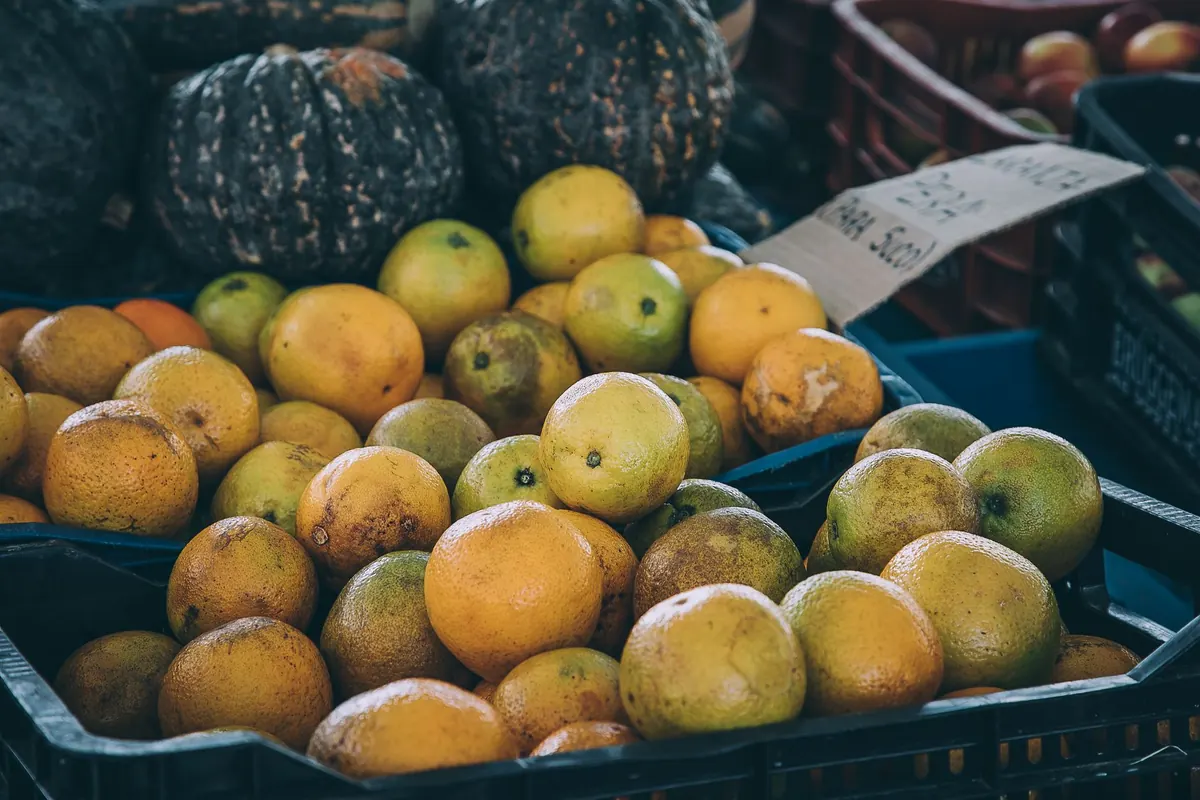
- Lemons: 3 medium, about 300g total. Thin-skinned, heavy for their size, and unwaxed if you can find them. Otherwise scrub them well under warm water.
- Granulated sugar: 300g. White sugar gives the cleanest lemon flavour. Golden caster sugar works too and adds a faint caramel note.
- Water: 600ml. Tap water is fine unless yours tastes strongly of chlorine, in which case use filtered.
- A wide, heavy pan: stainless steel or enamel. Bare aluminium and unlined copper react with the acid and can leave a metallic taste.
- A wooden spoon and a long-handled metal spoon for skimming.
- A square of muslin, a tea strainer, or a small mesh bag for the seeds.
- Two clean 250ml jars with lids, and a couple of small saucers kept in the freezer for testing.
The Overnight Soak
This is the step people skip, and it is the one that does the most work.
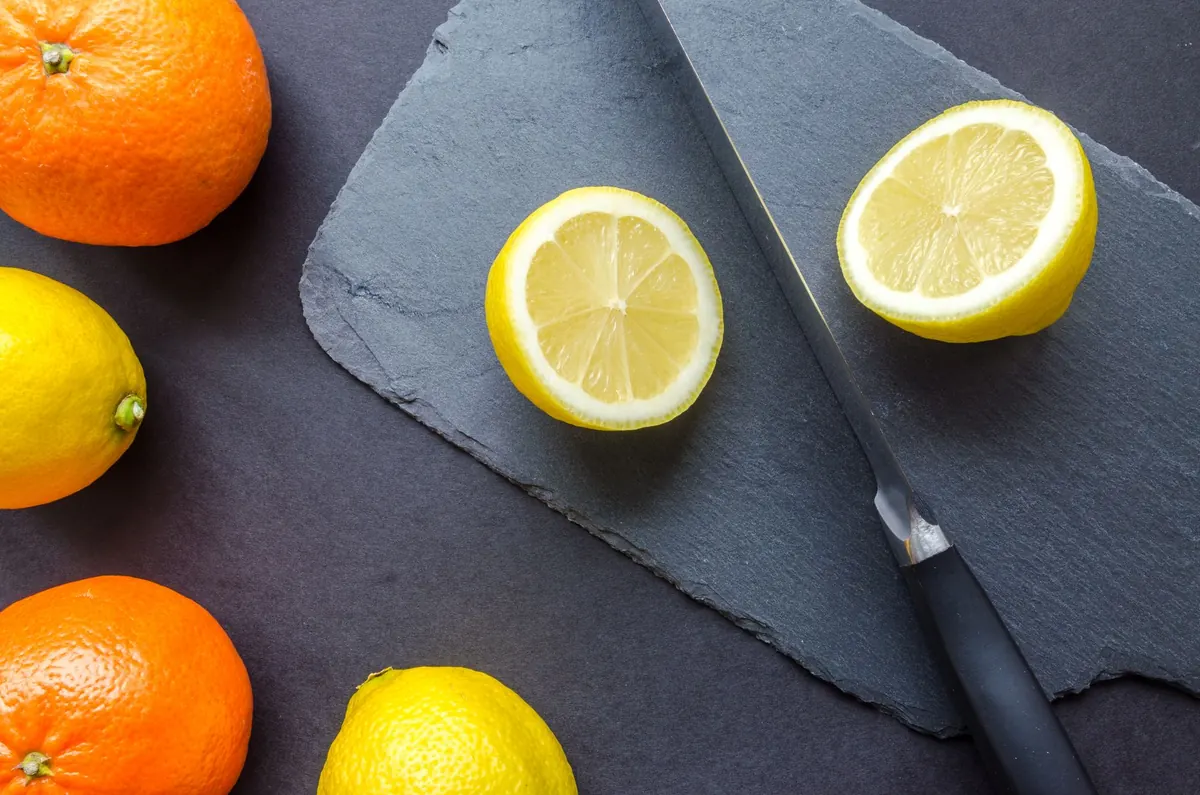
Wash the lemons, trim the little nub at the top and the flat base, then cut each one in half lengthwise. Lay each half flat and slice as thinly as your knife allows — aim for about 2mm. You are keeping everything: the peel, the white pith, the juice that runs onto the board. The pith is not the enemy here. It holds pectin, and pectin is what turns lemon juice and sugar into something that sits up on a piece of toast.
As you slice, pick out the seeds and drop them into your muslin square or mesh bag. Tie it closed. Seeds are unusually rich in pectin, which is why they get to come along for the ride.
Put the sliced lemon, the seed bag, and the 600ml of water into your pan. Cover it and leave it on the counter for twelve to twenty-four hours. If your kitchen is hot, put it in the fridge instead.
The soak does two things. It softens the shreds so they cook tender in the short time you have before the marmalade sets, and it draws pectin out of the peel and into the water, where it can do its job later. Skip the soak and you will likely end up with chewy peel and a runny jar.
Cooking the Marmalade
- Simmer the fruit. Bring the pan to a gentle simmer, uncovered, and cook for about 20 to 25 minutes, until the shreds are completely tender. Test one by pressing it between your thumb and forefinger — it should collapse rather than resist. If it still has bite, give it another five minutes.
- Pull the seeds. Lift out the seed bag and press it against the side of the pan with the back of a spoon to squeeze out the pectin-heavy liquid inside, then discard the bag.
- Add the sugar. Pour in all 300g and stir over low heat until every grain has dissolved. Run a spoon across the bottom of the pan; if you can feel grit, keep stirring. Do not let it boil at this stage, or the sugar can catch and scorch before it dissolves.
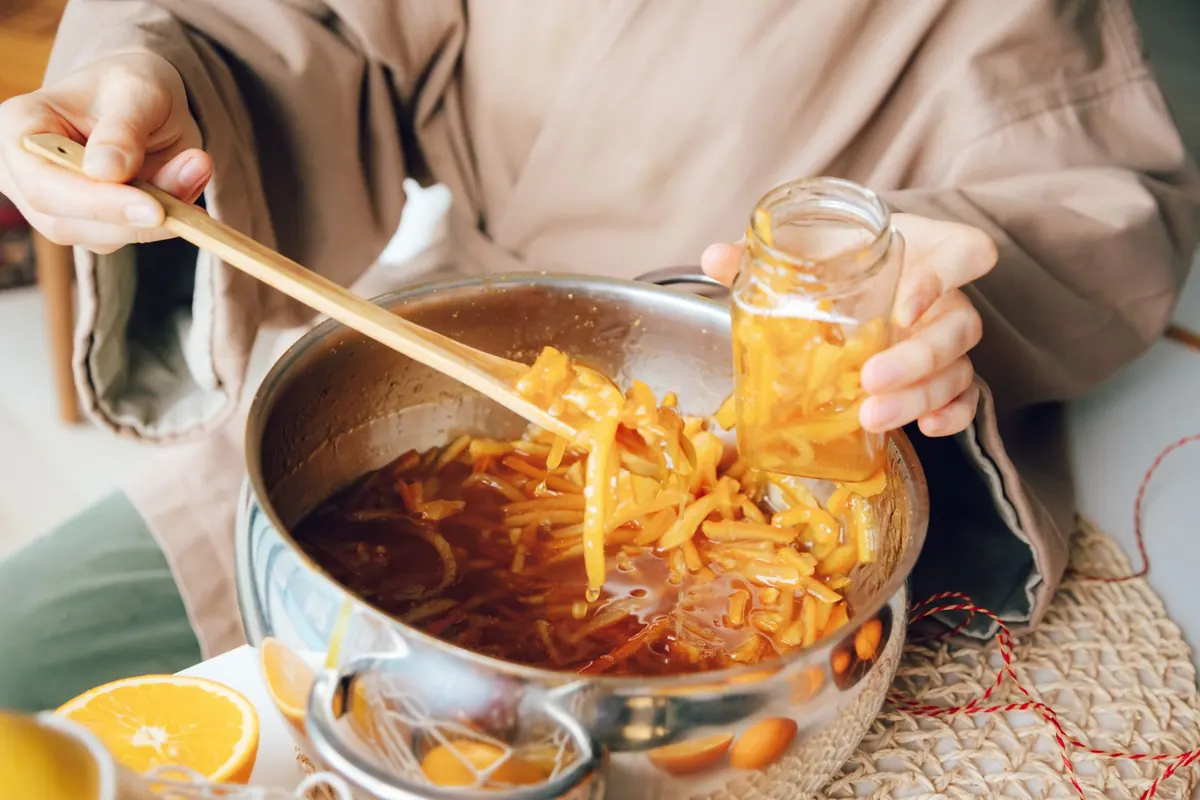
- Boil hard. Turn the heat up and bring it to a brisk, rolling boil. Stir occasionally, and skim off the pale foam that gathers at the edges with your metal spoon. Expect 12 to 20 minutes.
- Start testing early. At the 12-minute mark, begin checking for set, then check again every three or four minutes. Over-boiled lemon marmalade loses its brightness quickly.
- Pot it. Take the pan off the heat, let it settle for a minute, skim once more, then ladle into hot jars.
Testing the Set — and What to Do If It Won't
Put a teaspoon of the hot marmalade on one of your chilled saucers and return it to the freezer for a minute. Push the edge of the blob with your fingertip. If it wrinkles and forms a skin that holds, it is ready. If it slides around like syrup, keep boiling and test again.
If you prefer a thermometer, setting point for marmalade sits around 104–105°C (219–221°F), though that figure shifts with altitude, which is why the wrinkle test is the more reliable one in a home kitchen.
If it stays runny
Most likely you boiled too briefly, or your lemons were low in pectin — Meyer lemons, in particular, set reluctantly. Boil another five to eight minutes and test again. A squeeze of juice from an ordinary lemon will help, though it does nudge you past three ingredients. If after half an hour it still refuses, stop. A soft-set lemon marmalade is excellent spooned over yoghurt or swirled into a dressing; call it lemon syrup and enjoy it.
If it sets too firm
Firm marmalade is not a failure. It will loosen as soon as you stir a spoonful of hot water through the jar, or the first time it melts onto a hot crumpet.
If it tastes bitter
Bitterness comes from the pith and from long cooking, and it is hard to correct after the fact. Next time, pour off half the soaking water and replace it with fresh before you start cooking, and pull the pan off the heat the moment the set test passes.
Jars, Storage and a Few Good Uses
Wash your jars and lids in hot soapy water, rinse, then heat them in a 120°C oven for fifteen minutes or boil them for ten. Fill them while they are still hot, leaving about 5mm of headspace. Wipe the rims, screw the lids on, and let the jars cool undisturbed. You should hear a soft pop as each one seals.
Sealed jars keep for months in a cool, dark cupboard. If you want to store them at room temperature for longer with total confidence, process them in a boiling water bath for ten minutes. Otherwise, keep the jars in the fridge and use the open one within a few weeks — this is a small batch, so that is rarely a problem.
Toast is the obvious destination, and it earns its reputation. Beyond that, try a spoonful stirred into a mustard vinaigrette, warmed and brushed over roast carrots or a chicken thigh before it goes in the oven, or tucked into the middle of a thumbprint cookie. A teaspoon melted into a mug of hot water with a squeeze of lemon makes a decent instant glaze for a plain cake. Two jars will not last long, and that is the point: this is a recipe you can make on a Sunday evening and repeat a fortnight later without clearing a whole day for it.
Photo: ROMAN ODINTSOV / Pexels